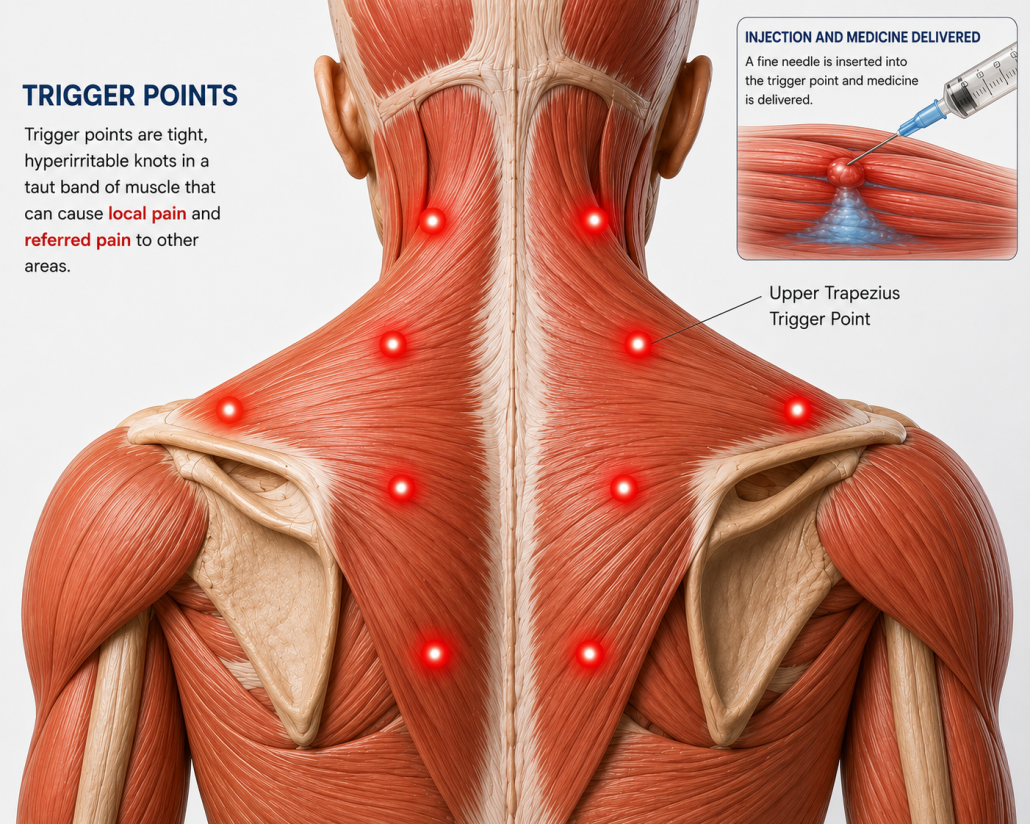
Trigger point injections are simple, minimally invasive treatments used to relieve painful muscle knots (known as trigger points) that cause persistent muscle pain, stiffness, headaches or reduced movements of the upper or lower limbs. These trigger point discomfort or aches, commonly develop when muscles become overworked, injured or remain tense for prolonged periods.
Common conditions which can be treated include ;
Neck and shoulder muscle pain
Upper back and trapezius tightness
Tension and cervicogenic headache
Myofascial pain syndrome
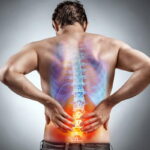
Low back muscle pain or ache
Hip and buttock muscle pain or ache
Sports-related muscle overuse injury
How Does the Trigger Point Injection Work?
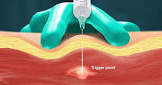
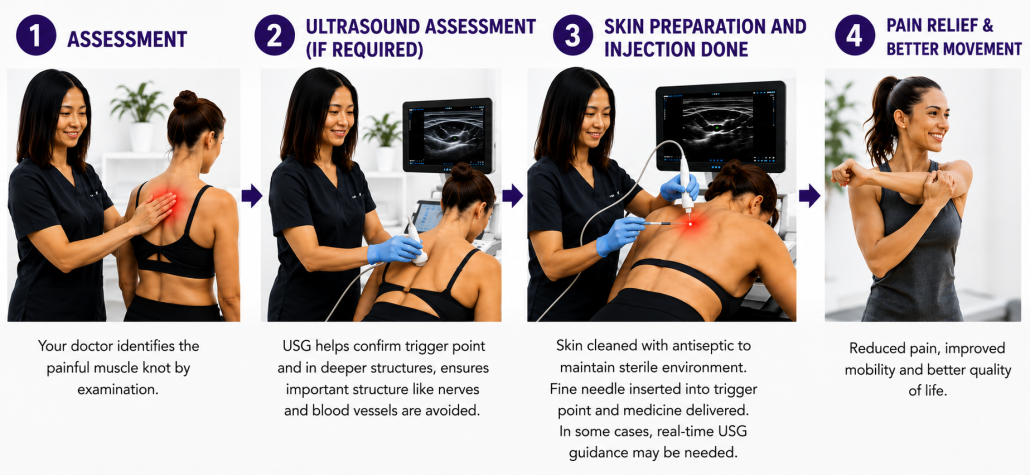
A trigger point is a tight band of muscle fibres that remains contracted and can produce pain both locally and into other parts of the body. During the procedure, your Sports Physician will identify the painful muscle and inserts a small needle directly into the trigger point. The injection is usually performed under Ultrasound guidance to improve precision and avoid surrounding nerves and blood vessels, particularly in deeper muscles. Depending on your condition, the injection may contain either one or a combination of the following medications ;
5% Dextrose (known as Glucopuncture) – to promote relaxation of irritated nerves and muscles
Local anaesthetic – to provide temporary pain relief
The goals of Trigger Point treatment are ;
Reduce the pain or ache
Improve the blood flow
Relax the tight muscles in the affected area
Restore normal movement
Allow rehabilitation exercises to be more effective and less painful
What to expect before and after Trigger Point treatment
BEFORE treatment, wear comfortable or loose clothing that allows access to the painful or affected area. There is NO need to fast before coming and you should continue taking your regular medications unless advised otherwise.
AFTER treatment, you can go home the same day. There may be mild soreness for 1-2 days around the treatment area. AVOID heavy lifting or strenuous exercises for the first 24-48 hours. You can start ;
Gentle exercises, movements or walking
Prescribed stretching and strengthening exercises
Maintaining good posture, adequate hydration, regular sleep, and stress management to reduce recurrence
Seek medical attention if you develop increasing redness, swelling, fever or severe pain after the procedure (these are uncommon side-effects).
Click to view MedicalCentric Podcast video on Trigger Points
Prognosis
Many patients experience improvement within a few days, while some notice relief immediately. The duration of benefit varies depending on the underlying cause of the muscle pain. Successful treatment focuses not only on relieving the muscle knot but also in correcting the factors that caused it. Remember, early treatment can reduce chronic pain, restore movement and help you return to work, exercise and sport sooner compared to long-standing conditions.
Consult your Sports Physician if you have any chronic muscle or joint aches / pains
Disclaimer. TELEME blog posts contains general information about health conditions and treatments. It is not intended to be a substitute for professional medical advice, diagnosis or treatment. The information is not advice and should not be treated as such.
If you think you may be suffering from any medical condition, you should seek immediate medical attention from your doctor or other professional healthcare providers. You should never delay seeking medical advice, disregard medical advice, or discontinue medical treatment because of information on this website.
How useful was this post?
Click on a star to rate it!
Average rating / 5. Vote count:
No votes so far! Be the first to rate this post.
As you found this post useful...
Share it on social media!
We are sorry that this post was not useful for you!
Let us improve this post!
Tell us how we can improve this post?
You May Like This
Trigger Finger Trigger Finger Trigger finger is a condition that causes pain, stiffness and as well as…
Ganglion Ganglion Ganglion cysts are round or oval lumps filled with a gel-like fluid found along…